Transient Tirana
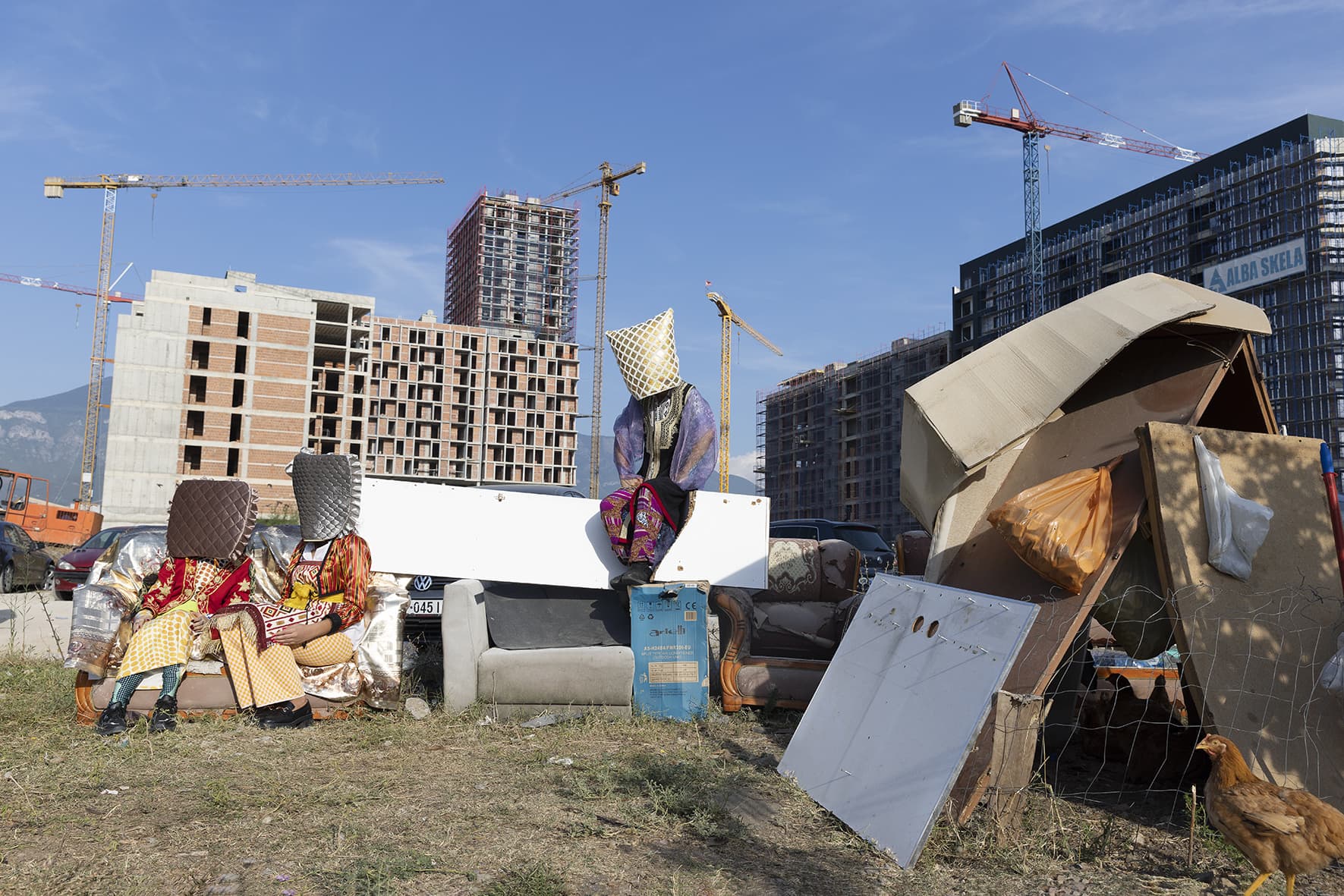
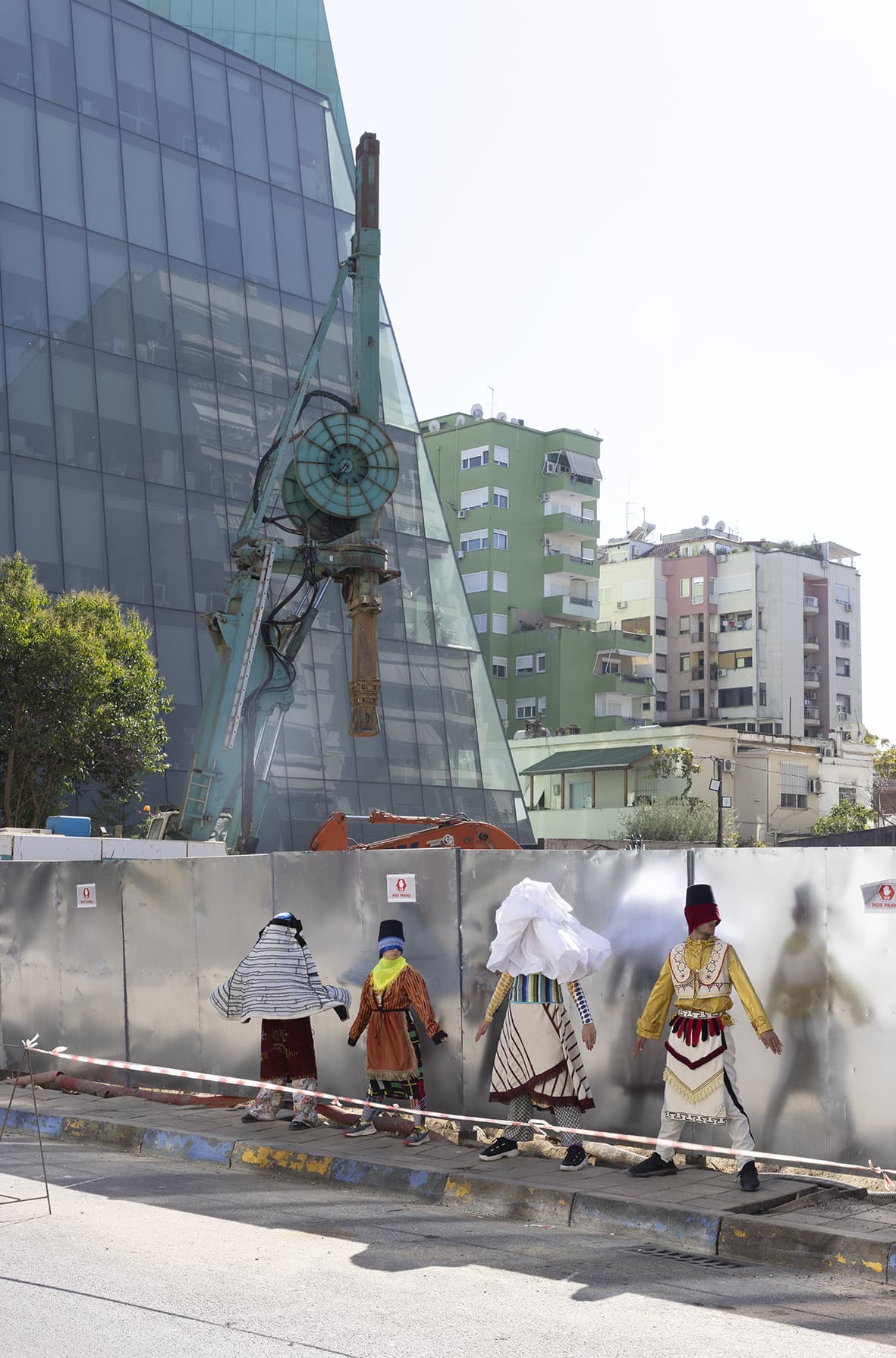
Tirana presents itself as an urban landscape in constant change and re- building: an urban texture caught between reconstruction and new cons- truction, between the past and the future. Old and new exist side by side – edificies unfinished – decaying meet new buildings under construction, represented by digitally produced marketing visualisations that promise a future removed from everyday life – including unrestricted panoramic views. The result is a visual field of tension between different qualities, materials and styles, characterised by improvisation and contradiction.
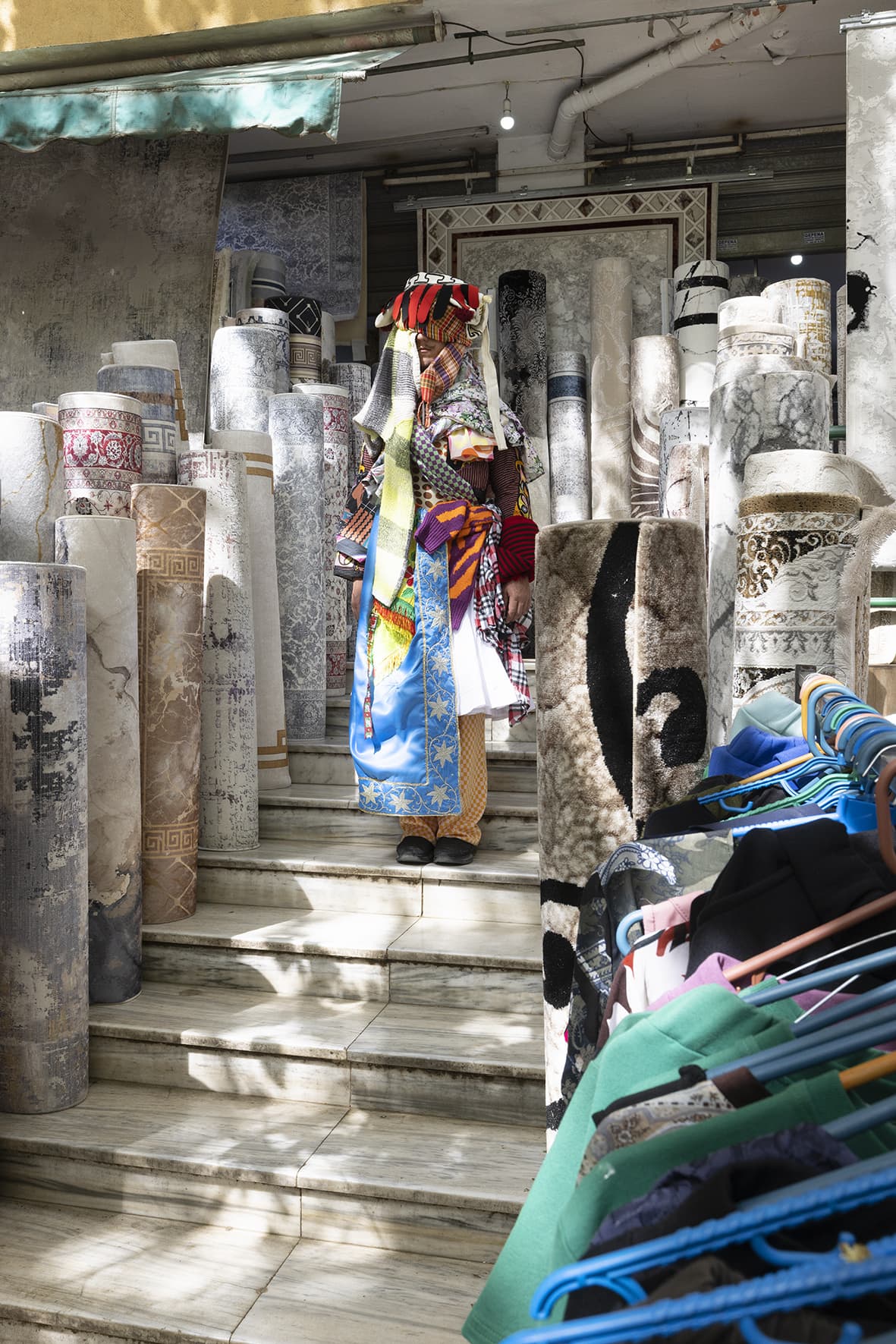
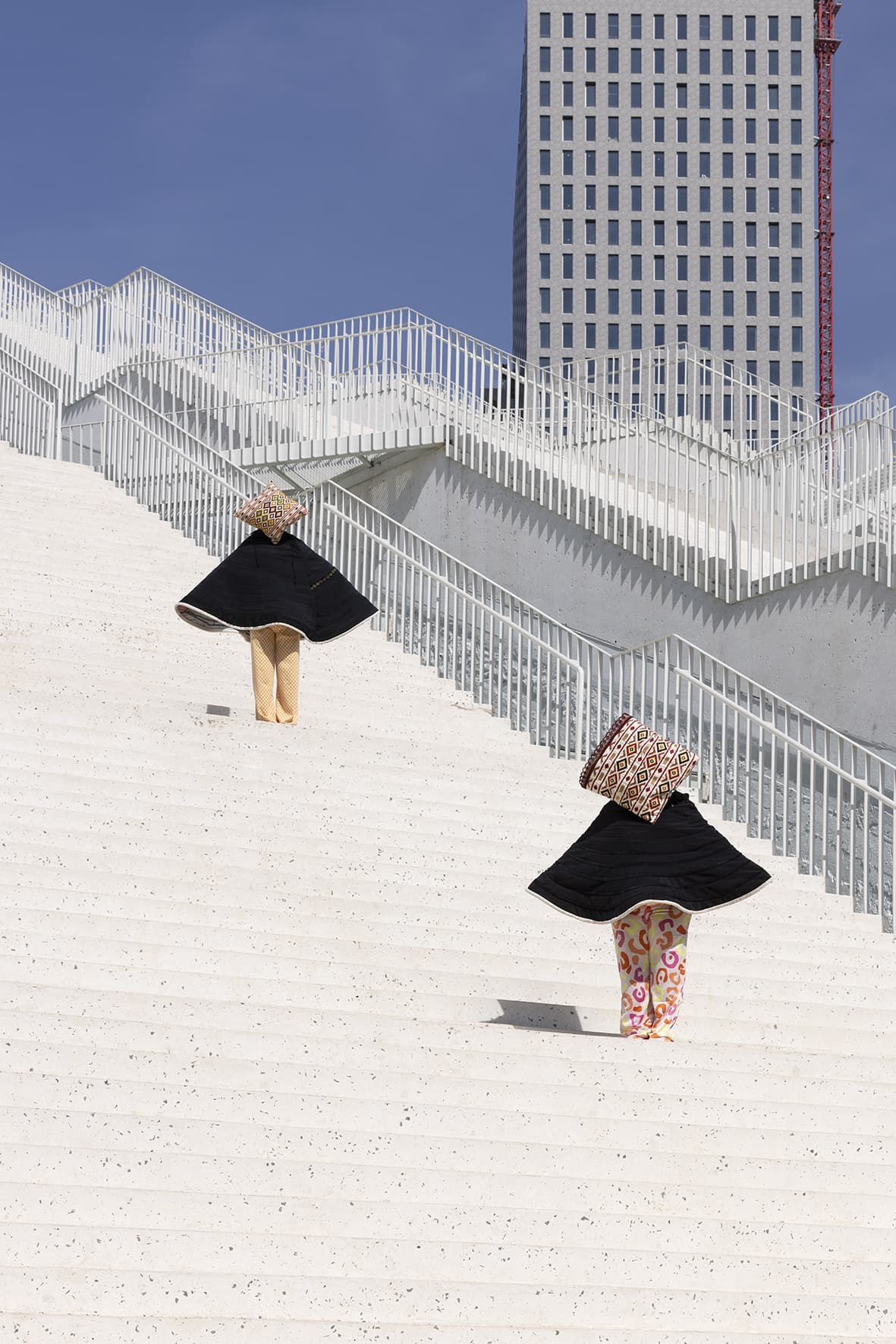
In this fragmented architecture, Dorner and Rastl stage people dressed in traditional Albanian garments from different regions of the country layered with global ‘fast fashion’. These juxtapositions reflect the social and cultural hybridity that characterises Tirana in the process of its trans- formation. Transient Tirana thus becomes a photographic study of simul- taneity – of identity, change and the aesthetics of the unfinished.
“As Raymond Williams asserted, one of the special characteristics of capitalism is the conflict it creates between the needs of culture: the need to integrate the wishes and dreams of the subaltern in a mar- ket-appropriate form on the one side; and the need to maintain reverence and respect for cultural forms that legitimize existing inequalities on the other.”
See Raymond Williams, Culture (London: Fontana, 1981), p. 99; quote from Barry King, “On the task of remembering: The search for the perfect moment,” in: Herta Wolf (publisher), Diskurse der Fotografie. Fotokritik am Ende des fotografischen Zeitalters (A Critique of Photography at the End of the Photographic Era), vol. 2 (Frankfurt am Main: Suhrkamp, 2003), pp. 173-214; here p. 173.
Media & About